
Cleanser for Dry Skin That Won’t Strip: How to Choose
Affiliate disclosure: This post contains affiliate links. As an Amazon Associate, we earn a small commission from qualifying purchases, at no extra cost to you. Prices and ratings change on Amazon — check the current details on the product page before you buy.
The short answer
For dry skin, choose a gentle, non-foaming or lightly foaming cleanser labeled for dry or sensitive skin, use lukewarm (not hot) water, and cleanse once a day in the evening — most dry skin does fine with a water-only rinse in the morning. Stripping is usually a technique problem as much as a product problem: hot water, long washing, and twice-daily foaming cleansers will dry out skin even with a good formula.
What makes a cleanser stripping
Stripping cleansers remove more than surface dirt and sunscreen: they lift away the skin’s own surface lipids, leaving that tight, squeaky feeling people mistake for clean. For dry skin, warning signs on a label are strong fragrance, denatured alcohol high in the list, and marketing aimed at deep oil control. Cream, milk, and hydrating gel formats are the safer starting point. The CeraVe Hydrating Facial Cleanser is the catalog’s classic example of a non-foaming hydrating format made for normal to dry skin. Browse options in our cleansers collection.
A dry-skin cleansing routine, step by step
Evening: 1) If you wore makeup or water-resistant sunscreen, start with a cleansing oil such as the Anua Heartleaf Pore Control Cleansing Oil to dissolve it. 2) Follow with your hydrating cleanser, massaged for about 30 to 60 seconds with lukewarm water. 3) Pat — do not rub — dry, and apply moisturizer while skin is still slightly damp. Morning: rinse with water alone, or use the hydrating cleanser only if your skin feels coated from a rich night cream. That single change, dropping the morning wash, fixes dryness for many people without buying anything.
Foaming cleansers: are they all off-limits
No. Modern gentle foaming formulas exist, and some dry-skin readers prefer the feel. The Anua Heartleaf Quercetinol Pore Deep Cleansing Foam, for example, is a foaming second-step cleanser in this catalog. The test is how your skin feels ten minutes after washing: comfortable means the product works for you; tight and shiny means switch formats or reduce frequency. Our foaming vs cream comparison thinking applies here — format is a preference, after-feel is the verdict.
When dryness is not the cleanser’s fault
If skin stays dry and flaky despite a gentle routine, look at the rest of the picture: very hot showers, harsh weather, over-exfoliating, and too many actives at once are common causes. Simplify to cleanser, moisturizer, and sunscreen for two weeks. Persistent scaling, cracking, or irritation deserves a dermatologist rather than another product swap.
Frequently asked questions
How often should dry skin use cleanser?
Once daily, in the evening, is enough for most dry skin. Rinse with water in the morning.
Is cleansing oil okay for dry skin?
Yes — oils dissolve makeup and sunscreen without foaming detergents, and are often the most comfortable first cleanse for dry skin.
Why does my face feel tight after washing?
That tight feeling signals surface lipids were removed. Switch to a hydrating format, shorten wash time, and use lukewarm water.
Shop the products in this article
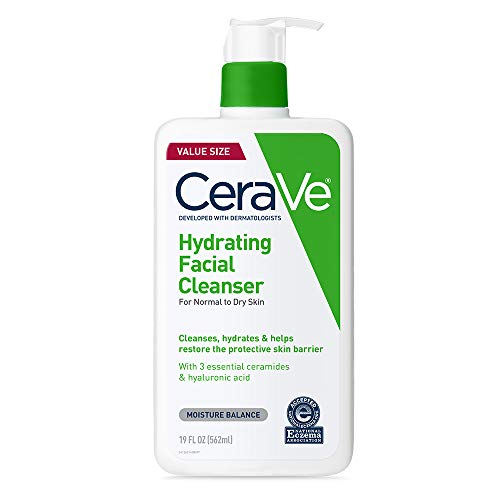
CeraVe Hydrating Facial Cleanser
Check Price on Amazon

Anua Heartleaf Pore Control Cleansing Oil
Check Price on Amazon

Anua Heartleaf Quercetinol Pore Deep Cleansing Foam
Check Price on Amazon