
Glycerin vs Hyaluronic Acid: What Is the Difference?
Affiliate disclosure: This post contains affiliate links. As an Amazon Associate, we earn a small commission from qualifying purchases, at no extra cost to you. Prices and ratings change on Amazon — check the current details on the product page before you buy.
The short answer
Both are humectants — ingredients that attract and hold water in the surface of the skin — and most good hydrating formulas use them together rather than forcing a choice. Glycerin is the older, inexpensive workhorse: reliable, present in countless moisturizers, and effective across climates. Hyaluronic acid is the headline ingredient of hydrating serums, able to hold many times its weight in water in lab conditions and popular for its light, layerable feel. For your routine, the practical question is not which molecule wins, but whether your skin is getting a humectant step plus a moisturizer over it to seal that water in.
How each one behaves
Glycerin draws water into the skin’s surface and is forgiving to formulate with, which is why it appears in cleansers, lotions, and creams alike — a moisturizer such as CeraVe Moisturizing Cream relies on this category of dependable hydration alongside its barrier ingredients. Hyaluronic acid sits closer to the surface as a film-forming humectant and shines in serum format: the ClarityRx Daily Dose of Water Hyaluronic Acid Serum is this catalog’s dedicated example, designed as the water step under moisturizer. In very dry air, any humectant performs best applied to slightly damp skin with a cream over it, so the water it holds is yours rather than the room’s. Browse options in our serums and treatments collection.
Which should you choose
Choose by format and routine gap. If you want one hydrating serum to layer under your current moisturizer, hyaluronic acid is the classic pick. If your moisturizer already keeps skin comfortable all day, you are already getting glycerin-class hydration and may not need another product at all. A barrier-focused serum such as the ANUA Rice Ceramide 7 Hydrating Barrier Serum shows the third option: humectant support paired with ceramide positioning, useful when dryness comes with sensitivity. Read labels for the combination, not a single hero ingredient.
How to use humectants well
Apply serums to damp — not dripping — skin after cleansing, wait a few seconds, then moisturize over the top. That sealing step is the difference between hydration that lasts and serum that feels great for ten minutes. Use once or twice daily; more layers do not multiply the effect. If a hyaluronic serum ever feels sticky or pills under sunscreen, use less and let it settle a full minute. Judge hydration products over two to four weeks of consistent use, by end-of-day comfort rather than the first application.
Myths to drop
Hyaluronic acid is not an exfoliating acid, despite the name — it does not dissolve anything and is generally well tolerated. Glycerin is not a cheap filler to be avoided; it is one of the most proven humectants in skincare, and its presence high in an ingredient list is a good sign. And neither ingredient hydrates well entirely alone in a dry climate without a moisturizer over it — humectants attract water, creams keep it. Build the pair and the debate mostly disappears.
Frequently asked questions
Is glycerin or hyaluronic acid better?
Neither wins outright — formulas often use both. Pick by format: HA for a layering serum, glycerin-rich moisturizers for all-day comfort.
Should hyaluronic acid go on wet or dry skin?
Slightly damp skin, with moisturizer over it to seal the water in.
Can I use both together?
Yes — many products already combine them, and layering an HA serum under a glycerin-containing moisturizer is a standard routine.
Shop the products in this article
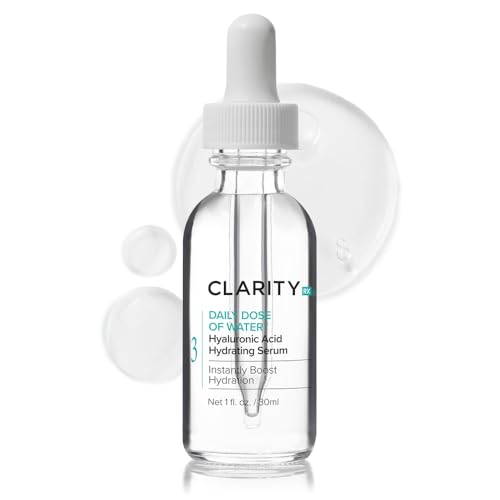
ClarityRx Daily Dose of Water Hyaluronic Acid Serum
Check Price on Amazon

CeraVe Moisturizing Cream
Check Price on Amazon

ANUA Rice Ceramide 7 Hydrating Barrier Serum
Check Price on Amazon